
Highlights of This Release
This release introduces a simplified Virtual Agent management experience, a new Insights & Statistics dashboard for Supsearch, and several improvements to Agentic AI functionality and observability.
The update makes it easier to create and manage virtual agents, improves visibility into search performance and knowledge gaps, and enhances how agentic conversations are logged and evaluated.
Simplified Virtual Agent Overview & Creation Experience
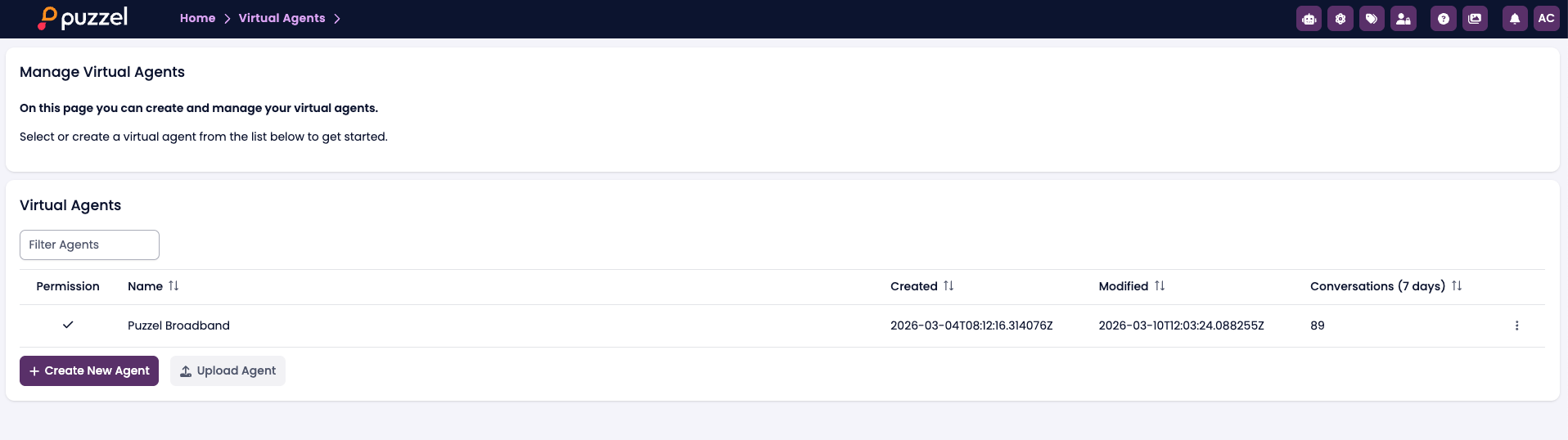
We have simplified the overview of Virtual Agents and improved the process of creating a new agent.
The agent overview has been streamlined to make it easier to manage your active agents, and the agent creation flow has been redesigned to reduce complexity when starting a new Virtual Agent.
What’s New
- Simplified Virtual Agent overview with fewer columns and a cleaner layout.
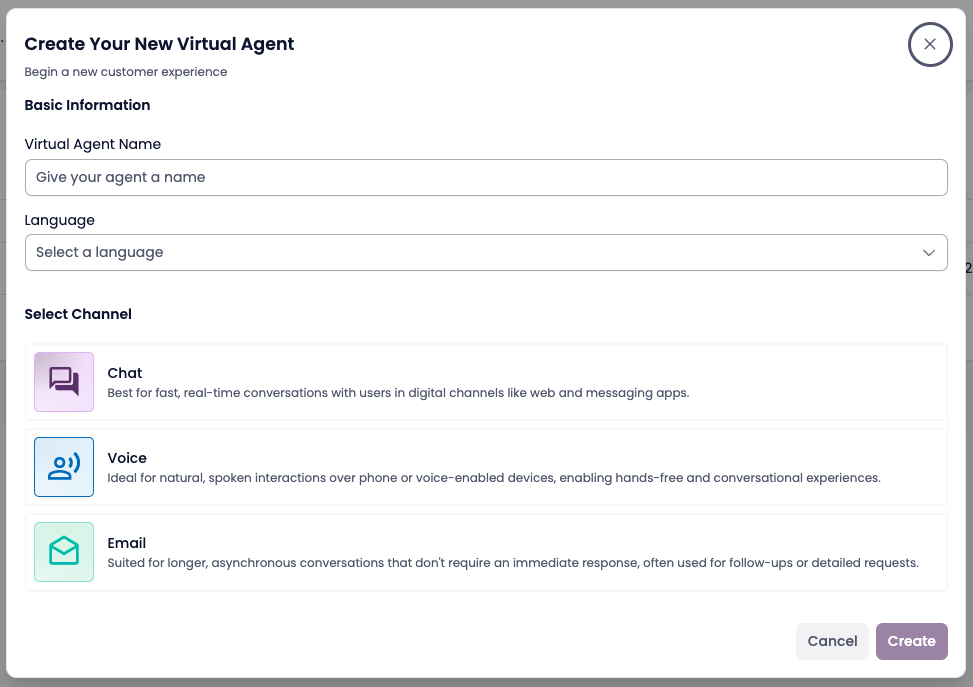
- A redesigned Create Virtual Agent experience.
- Instead of selecting from multiple templates, you now only choose:
- Language
- Channel
How It Works
The updated overview removes less frequently used columns and focuses on the most relevant information for managing agents.
When creating a new Virtual Agent, the configuration has been simplified. Rather than selecting between several predefined templates, you now only choose the language and channel where the agent will operate.
This makes the creation process faster and easier, particularly for new users.
Why This Matters
- Faster setup of new Virtual Agents
- Cleaner overview when managing multiple agents
- Reduced complexity for new users
New Insights & Statistics Dashboard for Supsearch (Beta)
A new Insights & Statistics dashboard is being introduced for Virtual Agents using Supsearch.
This dashboard will initially be released in beta and tested with a limited group of customers before becoming generally available.
The goal is to provide deeper visibility into search behavior, knowledge gaps, and optimization opportunities.

What’s New
- A completely new dashboard for search statistics and insights
- Data grouped by search engine
- High-level statistics showing:
- Traffic
- Popular topics
- Query trends
- New insight tools:
- Knowledge Gaps
- Search Engine Optimization suggestions
How It Works
At the top of the dashboard you will find high-level statistics for each search engine, showing how users interact with your knowledge base.
Below this section, the dashboard presents insight areas designed to help improve search performance and content coverage.
Knowledge Gaps
Using agentic AI, the system analyzes searches made by Virtual Agents or Puzzel Co-pilot and identifies areas where relevant knowledge may be missing.
These knowledge gaps are ranked by query volume, allowing you to quickly identify the most impactful gaps.
You can drill down into a knowledge gap to:
- See which queries are related to the gap
- Understand the potential impact of resolving it
If Conversation Intelligence is enabled, the system can also analyze conversations handled by contact center agents and use them to:
- Draft a new article
- Suggest updates to existing articles
- Generate an outline for missing content

Search Engine Optimization
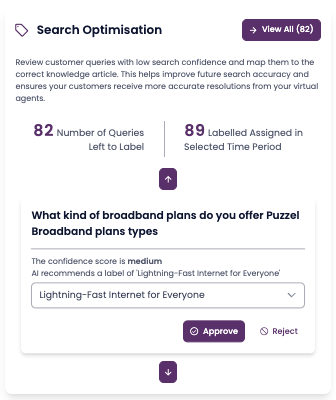
The dashboard also helps improve search results through query labeling suggestions.
Agentic AI identifies queries that could benefit from better article matching and suggests possible article labels.
Each suggestion includes a confidence score indicating how likely the match is.
You can:
- Approve the suggested article
- Assign a different article manually
After approval and retraining of the search engine, similar queries will automatically return the correct article in the future.
Why This Matters
- Better visibility into search performance
- Faster identification of missing knowledge
- AI-assisted improvements to knowledge bases
- Continuous optimization of search accuracy
Improvements to Agentic
Several improvements have been made to how agentic nodes behave and appear within BotStudio.
What’s New
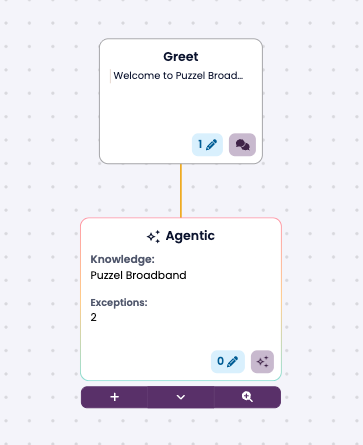
- Improved visualization of agentic nodes in the graph view
- Global nodes now trigger correctly even when a conversation is inside an agentic node
- Better guard handling for agentic responses
- Improved source referencing for generated answers
- Improved Agentic Logs and Observability
Improved visualization
Improved visualization of agentic nodes in the graph view.
Improved Guard Handling
The relevance guard and groundedness guard have been refined to provide more reliable results for the agentic node output.
Confidence scoring now uses clearer levels:
- Low confidence
- Medium confidence
- High confidence
This makes it easier to evaluate the quality of AI responses.
Improved Source References
A new structured output option has been introduced for source references in the agentic node.
This feature can be enabled in:
Configuration → Generative AI → Use structured output citation

When enabled, the agent uses structured output for citations, which improves the consistency and accuracy of source references.
Why This Matters
- Better reliability in AI-generated answers
- Improved debugging and transparency
- More consistent source attribution
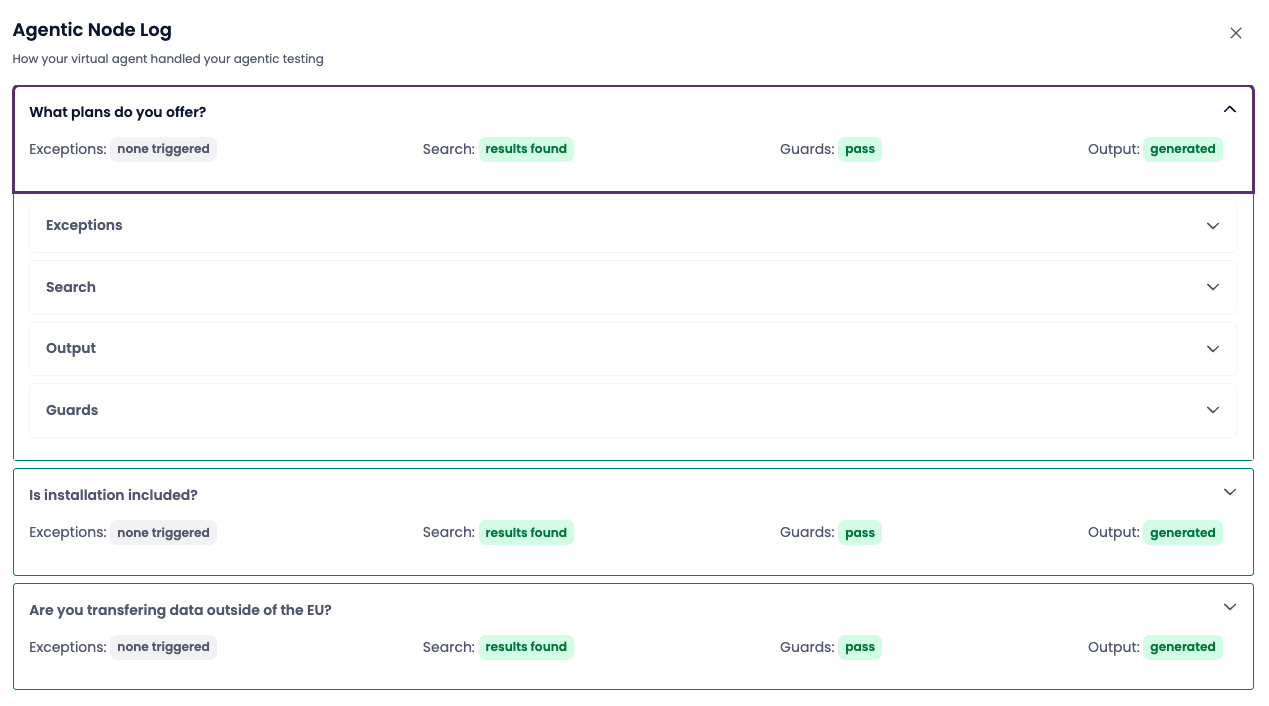
Improved Agentic Logs and Observability
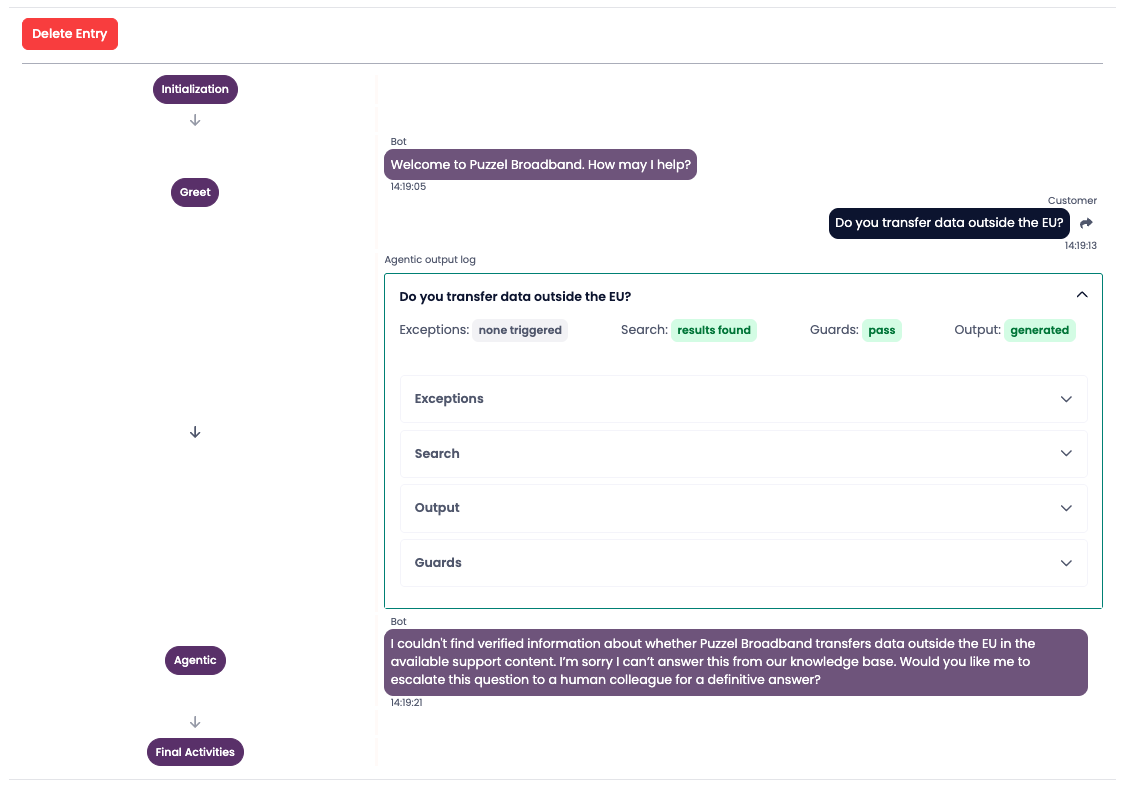
Agentic conversation logs have been redesigned to improve readability and troubleshooting.
What’s New
- A new agentic log view in the Demo Panel
- Conversation logs now display agentic conversations in a readable format
- Logs are no longer shown only as raw JSON
- Additional details can be expanded or collapsed
How It Works
When reviewing a conversation in the Demo Panel or Conversation Logs page, agentic conversations are now displayed in a structured, readable format.
This allows users to understand:
- What actions the agent took
- Why those actions occurred
- What decisions were made during the conversation
Details can be expanded when deeper troubleshooting is required.
Why This Matters
- Easier debugging of agentic conversations
- Faster understanding of agent behavior
- Improved transparency when testing and monitoring bots